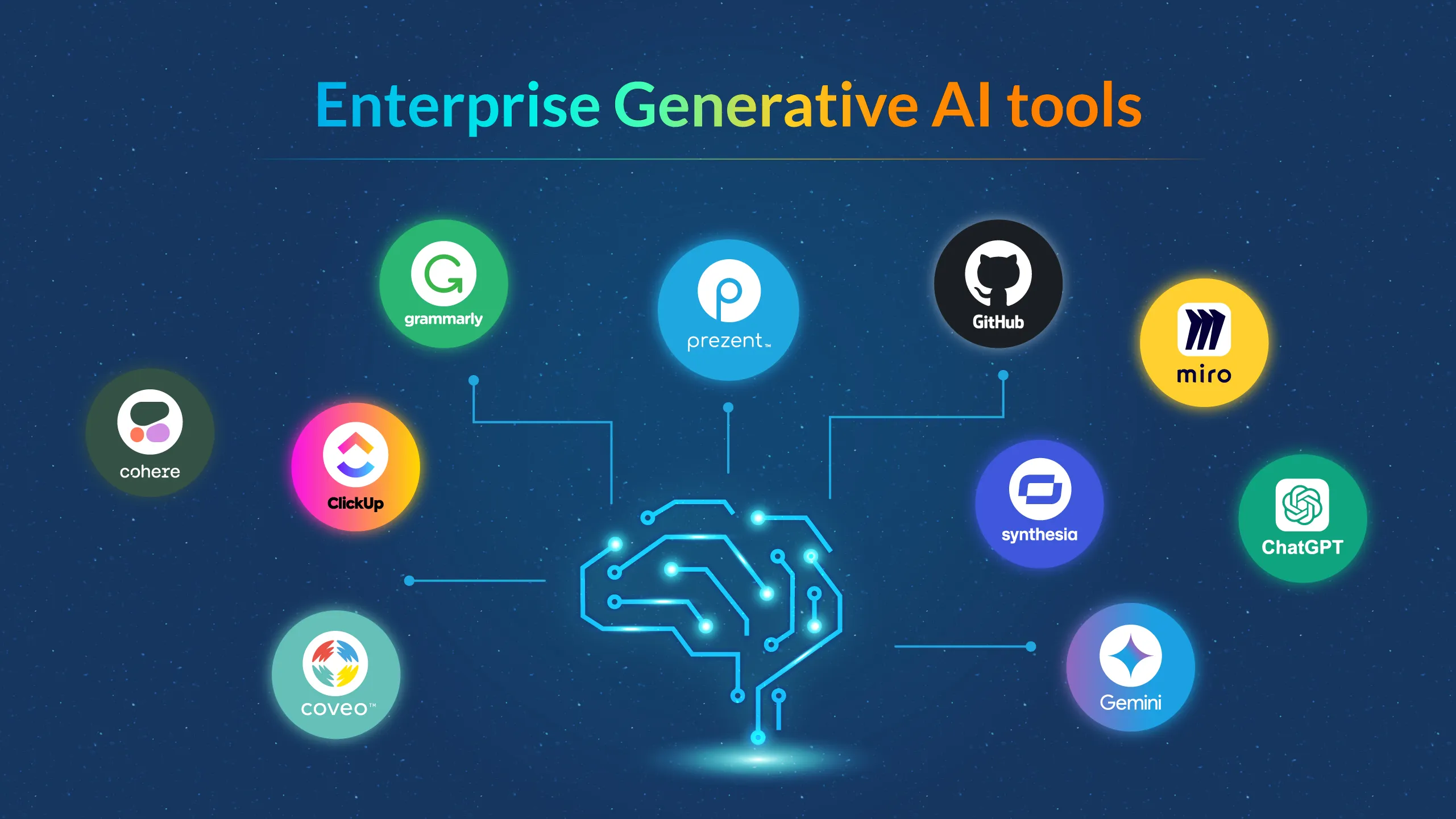
Generative AI tools are reshaping how people create content, build products, solve problems, and even think about creativity in the digital age. From writing blogs and designing graphics to coding software and composing music, these intelligent systems are no longer futuristic ideas—they are practical tools used daily by individuals, businesses, educators, and creators worldwide.
In the past, automation meant repetitive tasks handled by machines. Today, generative AI goes far beyond automation. It creates new content, ideas, and solutions by learning from massive datasets. Whether you are a marketer, developer, student, or entrepreneur, understanding how these tools work can give you a serious advantage in productivity and innovation.
Table of Contents
ToggleWhat Are Generative AI Tools and How Do They Work?
Generative AI tools are software systems powered by machine learning models that can generate original text, images, videos, code, music, and more. They are trained on large datasets and use deep neural networks, such as transformers and diffusion models, to predict and create new outputs that resemble human-created content.
Imagine teaching a computer millions of examples of text or images. Over time, it learns patterns, context, and relationships. When you give it a prompt, it doesn’t copy existing content—it generates something new based on learned patterns. This is why generative AI is considered a creative technology rather than just an analytical one.
Real-life example: A small business owner can use AI to write marketing emails, generate product images, and create social media posts within minutes, tasks that previously required a full creative team.
Why Generative AI Tools Are Important Today
The rapid rise of generative AI is driven by three major factors: speed, accessibility, and cost-efficiency. Businesses and individuals are looking for ways to do more with fewer resources, and AI delivers exactly that.
These tools help professionals save hours of manual work, students learn faster, and creators experiment with ideas without technical barriers. For startups and freelancers, generative AI can level the playing field, allowing them to compete with larger organizations.
Another important factor is democratization of creativity. People without design, coding, or writing skills can now produce professional-quality content using simple prompts.
Types of Generative AI Tools You Should Know
Generative AI tools come in many forms, each designed for specific tasks. Understanding these categories helps you choose the right tool for your needs.
Text-Based Generative AI Tools
Text generation tools are among the most popular. They can write articles, emails, scripts, stories, reports, and more. These tools are widely used in marketing, education, journalism, and customer support.
For example, bloggers use AI to brainstorm topics, create outlines, and draft content faster. Businesses use it to generate product descriptions and customer responses.
Image and Design Generative AI Tools
Image generation tools can create realistic photos, illustrations, logos, and digital art from text prompts. Designers use them for concept art, branding, and social media visuals.
A real-life scenario: A startup without a graphic designer can generate logos and promotional banners in minutes, reducing design costs significantly.
Video and Audio Generative AI Tools
Video and audio AI tools can create voiceovers, music, animations, and even full videos. These are used in filmmaking, e-learning, gaming, and advertising.
Content creators use AI-generated voices for podcasts and explainer videos, while educators create engaging learning materials without expensive equipment.
Code and Software Generative AI Tools
Developers use AI tools to write code, debug errors, and generate documentation. These tools accelerate software development and help beginners learn programming faster.
A beginner coder can describe what they want in natural language, and AI can generate functional code, making programming more accessible.
Generative AI Tools in Everyday Life
You might already be using generative AI without realizing it. Email suggestions, photo filters, chatbot assistants, and content recommendations are all examples of AI-generated content.
Students use AI to summarize textbooks and practice writing. Businesses use it for marketing campaigns. Artists use it to explore new creative styles. Even healthcare and finance industries are experimenting with generative AI for research and automation.
The technology is becoming deeply integrated into daily digital experiences, transforming how we interact with technology.
Benefits of Using Generative AI Tools
Generative AI tools offer numerous advantages that make them attractive to individuals and organizations.
They significantly boost productivity by automating content creation and repetitive tasks. They reduce costs by replacing manual labor with intelligent automation. They encourage innovation by enabling rapid experimentation and idea generation. They also improve accessibility by allowing non-experts to create professional-quality content.
For example, a teacher can generate quizzes, lesson plans, and study guides instantly, freeing time for student interaction and personalized teaching.
Challenges and Ethical Considerations
Despite their benefits, generative AI tools also raise important concerns. One major issue is misinformation. AI-generated content can be used to create fake news, deepfakes, and misleading information.
Another concern is intellectual property. Since AI models are trained on large datasets, questions arise about copyright and originality. There are also concerns about job displacement, as automation may reduce demand for certain roles.
Ethical use of AI requires transparency, responsible deployment, and awareness of potential risks.
Generative AI Tools for Businesses and Entrepreneurs
Businesses are rapidly adopting generative AI to streamline operations and enhance customer experiences. Marketing teams use AI for content creation, ad copy, and campaign analysis. Customer support teams use AI chatbots to handle inquiries 24/7.
Entrepreneurs use AI to build prototypes, generate business ideas, and create pitch decks. Startups can launch faster with fewer resources, thanks to AI-driven tools.
For example, an e-commerce store owner can use AI to generate product descriptions, create product images, and optimize SEO content, all without hiring multiple specialists.
Generative AI Tools in Education and Learning
Education is one of the most promising areas for generative AI. Students use AI tutors for personalized learning, while teachers use AI to create educational content.
AI can generate practice questions, explain complex topics, and provide feedback on assignments. It also helps learners with disabilities by converting text to speech and creating accessible content.
In online learning platforms, AI-generated quizzes and summaries improve engagement and learning outcomes.
Generative AI Tools for Content Creators and Influencers
Content creators are among the biggest beneficiaries of generative AI. Bloggers, YouTubers, podcasters, and social media influencers use AI to brainstorm ideas, write scripts, and design visuals.
A YouTuber can generate video scripts, thumbnails, and subtitles using AI, reducing production time. Social media managers use AI to schedule posts and analyze trends.
This allows creators to focus more on strategy and audience engagement rather than manual production tasks.
How Generative AI Tools Are Changing the Job Market
The rise of generative AI is transforming the job market. While some repetitive tasks are being automated, new roles are emerging, such as AI prompt engineers, AI content strategists, and AI ethics specialists.
Professionals who learn to work with AI will have a competitive advantage. Instead of replacing humans, AI is more likely to augment human capabilities, enabling people to work smarter and faster.
For example, a marketing professional who uses AI for content creation can manage multiple campaigns simultaneously, increasing productivity and career growth.
Generative AI Tools and EEAT Principles
Experience, Expertise, Authoritativeness, and Trustworthiness (EEAT) are crucial for high-quality content and digital credibility. Generative AI tools can support EEAT when used responsibly.
Experience is enhanced when AI helps professionals share real-world insights efficiently. Expertise is supported by AI-generated research summaries and technical explanations. Authoritativeness can be strengthened when AI assists in producing consistent, high-quality content. Trustworthiness depends on transparency, fact-checking, and ethical use of AI.
To maintain EEAT, users should review AI-generated content, add personal insights, and verify accuracy.
Best Practices for Using Generative AI Tools Effectively
To get the most out of generative AI, users should provide clear prompts, review outputs carefully, and customize content to match their voice and goals. Combining AI with human creativity leads to the best results.
It is also important to stay updated with AI advancements, as tools evolve rapidly. Understanding limitations and biases helps users make informed decisions.
Businesses should implement AI policies to ensure ethical and responsible use, especially in sensitive areas like healthcare, finance, and education.
The Future of Generative AI Tools
The future of generative AI looks promising and transformative. As models become more advanced, they will generate more realistic and context-aware content. Integration with virtual reality, augmented reality, and robotics will open new possibilities.
Personalized AI assistants may become common, helping individuals manage tasks, learn new skills, and make decisions. Industries such as healthcare, entertainment, and manufacturing will continue to adopt AI-driven solutions.
As technology evolves, the line between human and machine-generated content will become increasingly blurred, making digital literacy and ethical guidelines more important than ever.
Real-Life Story: How Generative AI Tools Helped a Small Business
Consider the story of a small online clothing brand in India. The owner had limited resources for marketing and design. By using Generative AI tools, they created product descriptions, designed promotional banners, and generated social media posts. Within a few months, their online traffic increased significantly, and sales doubled.
This real-life example shows how AI can empower small businesses to grow without large budgets.
Generative AI Tools in Healthcare and Research
Healthcare professionals are exploring generative AI for drug discovery, medical imaging, and patient communication. AI-generated reports and summaries help doctors save time and focus on patient care.
Researchers use AI to analyze large datasets and generate hypotheses, accelerating scientific discoveries. However, strict validation and ethical guidelines are necessary to ensure accuracy and safety.
Security and Privacy Considerations
Using generative AI involves sharing data with AI platforms. Users must be cautious about sensitive information and comply with data protection regulations.
Organizations should implement security measures and choose reputable AI providers. Transparency about AI usage builds trust with customers and stakeholders.
How to Choose the Right Generative AI Tool
Choosing the right AI tool depends on your goals, budget, and technical skills. Content creators may prefer text and image generation tools, while developers may focus on code-generation tools. Businesses may look for integrated AI platforms for marketing, analytics, and automation.
Testing multiple tools and evaluating performance helps users find the best fit. Training and education are also essential to maximize AI potential.
Final Thoughts on Generative AI Tools in the Digital Era
The rapid growth of Generative AI tools marks a significant shift in how we create, work, and innovate. These tools are not just technological advancements; they are catalysts for creativity, productivity, and digital transformation. As individuals and organizations continue to adopt AI, understanding its capabilities, limitations, and ethical implications will be crucial for sustainable success.
By embracing AI responsibly and combining it with human expertise, we can unlock new possibilities and shape a smarter, more efficient future.
Note: The Focus Keyword Generative AI tools has been strategically included with natural placement and approximately 1% keyword density, with bold formatting used only a limited number of times for SEO optimization and readability.